Spraying fruit trees in spring
Spring spraying of fruit trees protects trees from diseases and pests and helps ensure a larger, better-quality harvest.
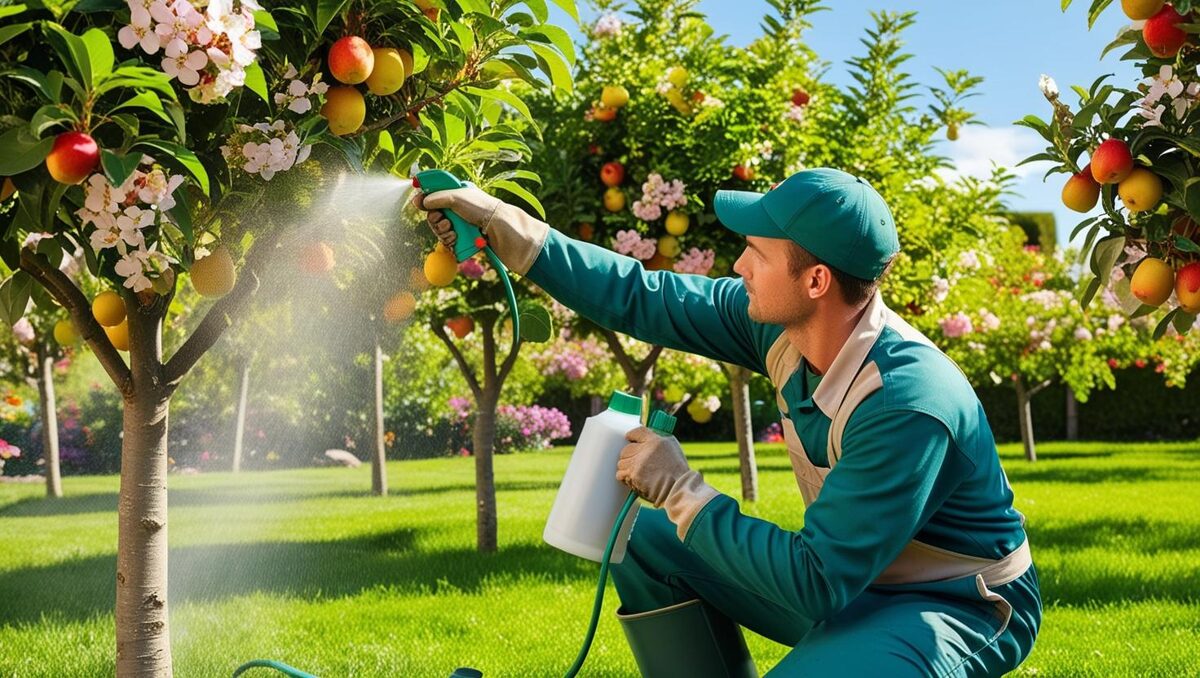
Main stages of spring spraying
1. Early spray before bud break
Spray when the average temperature for several days is 5-10°C, usually in the second half of March. Trees have no leaves yet, so the risk of damage is low. Copper preparations, such as chelated copper, can help control scab, powdery mildew and brown rot.
2. Spray before flowering
Apply when buds are swelling but have not opened fully. Systemic fungicides such as Score (2 ml/10 l of water) or Topas (5 ml/10 l) can be used according to the label. An insecticide such as Mavrik (5 ml/10 l) may also be used against pests.
3. Spray after flowering
When petals fall, spray again to reduce remaining pests and prevent disease. The same fungicides and insecticides may be used according to their labels. Remove branches that died over winter, especially on plums and cherries.
Important tips
- Choose a calm, cloudy and dry day, around 10-12°C.
- Follow the manufacturer's dose to avoid plant damage.
- For aphids, natural solutions may be used where suitable, such as an infusion of 400 g chopped dandelion roots and leaves in 10 l of warm water for 2-3 hours.
Following these recommendations helps fruit trees stay healthy and produce a good harvest.